

If you’re laying out a new facility or retrofitting a warehouse floor, you have one shot to get your impact protection right. Picking the wrong bollard isn't just a frustrating waste of money. It’s a massive safety hazard.
While all bollards look like sturdy steel posts, the real difference is what’s going on under the surface. If a 3-ton reach truck backs into the wrong type of post, it’s going to rip it right out of your slab.
Cast-in and bolt-down bollards do completely different jobs. Here is exactly how to choose the right one, based on years of walking sites across New Zealand.
To achieve best results, look into working with experts in bollard installation services to ensure your system is designed, supplied, and installed correctly from the outset.
Cast-In Bollards: When You Absolutely Cannot Afford a Breach
What are they? These are the heavyweights. Cast-in bollards are set deep into the ground. You dig a hole, drop the steel pipe in, and pour a solid concrete footing around it. Most of the time, you fill the core of the pipe with concrete, too. They are built to take a massive hit and stay standing.
Where you actually need them: These go where heavy vehicles mix with people or expensive assets.
- High-traffic loading docks and distribution centres.
- Storefronts (especially to prevent ram-raids).
- Public walkways right next to busy roads.
- Protecting critical infrastructure like power boxes or fuel tanks.
Why they work: When a truck hits a cast-in bollard, the force doesn't just snap the steel. The impact transfers down into that massive underground concrete footing and disperses into the earth. They don't budge.
But you have to get the installation right. You need the correct hole depth, proper curing time for the concrete, and heavy-duty protective coatings if your site gets hit by harsh coastal weather.
Bolt-Down Bollards: Fast, Flexible, but Know Their Limits
What are they? Exactly what they sound like. You take a heavy-duty steel base plate and drill serious anchor bolts straight into your existing concrete floor.
Where they belong: These are your indoor problem solvers. Bolt-down bollards are perfect for low-to-medium impact zones where you need to stop a pallet jack or a slow-moving electric forklift from clipping a doorway.
Typical applications include:
- Inside warehouses to protect racking ends or internal offices.
- Car parks (to manage cars, not heavy freight trucks).
- Sites where you physically can't dig because of underground pipes or cables.
- Quick retrofits where you can't afford to halt operations to pour concrete.
The reality check: Bolt-down bollards are fast to install. But let’s be clear—they are only as strong as the concrete slab you bolt them to. If a heavy truck hits one at speed, those bolts will rip chunks of concrete right out of your floor. Always confirm your slab thickness first, and never skimp on the quality of your load-rated anchors.
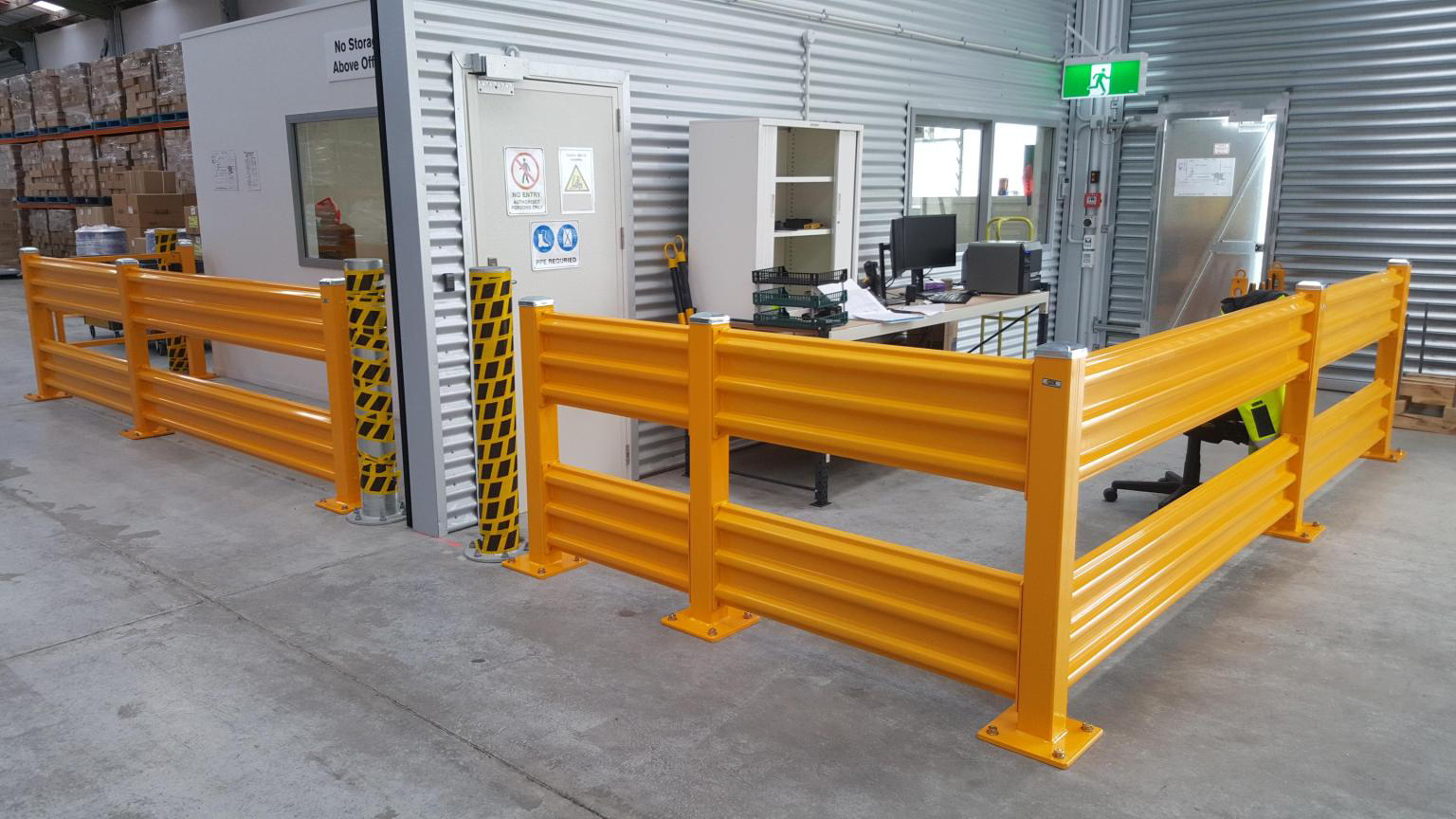
They can also be incorporated into warehouse traffic management solutions to support safer movement across sites.
Cast-In vs. Bolt-Down Bollards: Key Differences
Cast-In (In-Ground) Bollards
- Installation: Embedded in a concrete footing.
- Impact Resistance: High.
- Permanence: Permanent.
- Installation Time: Longer (requires digging and curing).
- Best Use Case: High-risk perimeters, heavy freight zones.
Bolt-Down Bollards
- Installation: Fixed directly to an existing slab.
- Impact Resistance: Moderate.
- Permanence: Semi-Permanent (can be unbolted).
- Installation Time: Faster.
- Best Use Case: Flexible internal areas, pedestrian zones.
Getting the Layout Right
The right solution comes down to how your specific site operates.
In most New Zealand facilities, the smartest approach isn't choosing just one. It’s a hybrid setup. You sink heavy cast-in bollards around your perimeter and loading docks to stop the big trucks, and use bolt-down bollards inside to keep internal traffic moving safely without tearing up your floor.
Build a Safer, More Resilient Site
Bollards only work if you put the right post in the right place. At Astrolift, we deliver end-to-end impact protection—from figuring out the layout to getting the posts professionally anchored into the ground.
Don't guess with your site's safety. Request a Site Assessment today and let our team make sure you get it right the first time