

Is Your Warehouse Workflow Working Against You?
An Industry Perspective on Productivity, Safety, and System Design in New Zealand Warehouses
Walk through enough warehouses across New Zealand and a pattern starts to emerge.
People are working hard. Forklifts are moving. Orders are being picked. Dispatch deadlines are being met — just.
Yet behind the constant activity, many operations are quietly struggling with the same issues: congestion, repeated handling, rising fatigue, and systems that no longer fit the way work is actually done.
In many cases, these problems are not caused by lack of effort or commitment. They are the result of workflow design that has evolved through necessity rather than intention.
WorkSafe New Zealand identifies musculoskeletal disorders as one of the most common forms of work-related harm, driven by physical strain, repetitive work, and poor task design (WorkSafe New Zealand, n.d.-a; WorkSafe New Zealand, n.d.-b). Inefficient warehouse systems frequently amplify these risks.
Under the Health and Safety at Work Act 2015, businesses are required to ensure, so far as is reasonably practicable, that work systems are designed and managed to minimise risk to workers (Parliamentary Counsel Office, 2015). How goods move through a facility is therefore not just an operational issue — it is a governance responsibility.
This article examines how workflow design affects safety and performance and why many warehouses are working harder than they need to.
What Warehouse Workflow Really Looks Like in Practice
On paper, most warehouse workflows look logical.
Stock is received. It is stored. Orders are picked. Goods are packed. Trucks are loaded.
In reality, the flow is rarely that clean.
Pallets are temporarily staged “just for now”. High-demand products drift away from picking zones. Emergency orders interrupt normal routes. Storage areas expand into walkways. Over time, what began as a sensible system becomes a patchwork of workarounds.
When this happens, unnecessary handling becomes normalised.
WorkSafe’s guidance on risk management highlights how poorly designed systems increase exposure to physical strain and unsafe practices (WorkSafe New Zealand, n.d.-c). Yet many operations adapt to inefficiency rather than address it.
The Warning Signs Most Warehouses Learn to Ignore
After working with a wide range of warehouse environments, certain patterns appear again and again.
Double-Handling as Standard Practice
In many facilities, stock is moved multiple times before reaching its final location. Temporary holding areas become permanent features. Repacking becomes routine.
Each extra movement increases labour demand and injury risk.
Congestion That Never Quite Gets Fixed
Forklifts queue. Pickers wait. Access points clog during peak periods.
Rather than redesigning traffic flow, many warehouses accept congestion as “part of the job” — despite its impact on safety and throughput.
Informal Systems Replacing Formal Ones
Improvised storage, handwritten signs, and unofficial staging zones are often signs that formal systems are no longer fit for purpose.
These workarounds may solve short-term problems, but they usually introduce new risks.
Rising Error Rates
When systems are inefficient, people rush.
Picking errors, damaged goods, and rework increase — all of which carry direct cost.
Growing Workforce Fatigue
Fatigue rarely appears overnight. It builds slowly through inefficient movement, unnecessary lifting, and constant pressure.
WorkSafe identifies fatigue as a contributor to unsafe manual handling and injury (WorkSafe New Zealand, Fatigue - What’s The Problem?).
Why Workflow Is a Safety Issue, Not Just an Efficiency Issue
Poor workflow design increases exposure to risk in subtle ways.
It leads to:
- More manual handling
- More awkward lifting
- More time pressure
- More shortcuts
Over time, these conditions undermine even the best training programs.
HSWA Section 30 requires businesses to eliminate risks where reasonably practicable and minimise remaining risks (Parliamentary Counsel Office, 2015). When systems are inefficient, compliance becomes harder to achieve — regardless of intent.
Safe behaviour is supported by safe systems.
The Cost Most Businesses Don’t See
Inefficient workflows rarely appear on a single balance sheet line.
Instead, they show up gradually:
- Overtime becomes routine
- Injury claims rise
- Absence increases
- Productivity plateaus
- Experienced staff leave
ACC data consistently shows the economic impact of preventable injuries (ACC, n.d.).
By the time leaders recognise the full cost, inefficiency is deeply embedded.
Where Meaningful Improvement Usually Starts
Improving workflow does not require constant disruption. It requires disciplined review.
Rethinking Layout and Zoning
High-performing warehouses treat layout as a strategic asset.
Fast-moving items are positioned close to dispatch. Replenishment paths are protected. Dead-end aisles are removed.
These changes reduce congestion and handling.
Reducing Physical Handling
Where possible, physical lifting is replaced with mechanical movement.
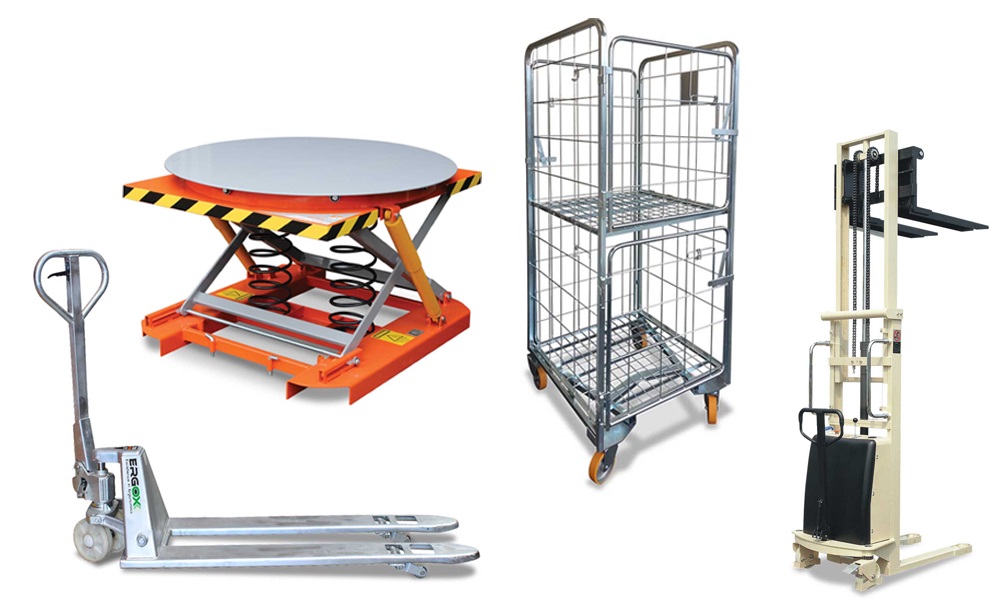
Conveyors, lift tables, pallet trucks, and automated systems reduce strain and improve consistency (WorkSafe New Zealand, Lifting, Carrying, Pushing, and Pulling - What’s the Problem?).
Treating Packing Areas as Production Zones
Packing stations are often designed last.
In efficient facilities, they are designed first.
Ergonomic benches, clear flow, and integrated tooling reduce fatigue and error.
Fixing the Docks
Many internal problems begin at the dock.
Poor scheduling, limited staging, and unclear traffic management create backlogs that spread throughout the facility.
Listening to the People Doing the Work
HSWA requires worker engagement for good reason (Parliamentary Counsel Office, 2015).
The most practical improvement ideas usually come from those navigating inefficient systems every day.
A Pattern Seen Repeatedly
In one facility, congestion and injury risk had become “normal”.
Stock was handled three times before storage. Pickers crossed forklift lanes. Packing benches were poorly positioned.
After reviewing the workflow and redesigning key zones, introducing mechanical aids, and reorganising traffic routes, the operation saw fewer near-misses, faster processing, and improved morale.
No additional staff were required.
The system had been the problem.
How Astrolift Approaches Workflow Improvement
Astrolift works with warehouses to address workflow challenges at a system level.
This includes:
- Site assessments
- Layout and process review
- Equipment integration
- Installation
- Preventative maintenance
- Long-term support
The focus is on building systems that support people, rather than forcing people to compensate for weak systems.
Final Reflections: Systems Shape Behaviour
Most warehouse teams want to work safely and efficiently.
When they struggle, it is rarely due to lack of effort.
It is usually because the system makes good work harder than it needs to be.
By investing in thoughtful design, appropriate equipment, and meaningful consultation, businesses can meet their regulatory obligations while building more resilient operations.
Workflow is not a background issue.
It is a leadership responsibility.
For support in reviewing your current systems or developing improvement strategies, Astrolift can provide practical, compliant guidance.